Supplier Logistics Bottlenecks
The Challenge
The company was experiencing recurring issues with raw material suppliers, including late deliveries and inconsistent material quality. Production teams felt the impact, but the organization lacked a consistent way to measure supplier performance or identify patterns over time.
Supplier problems were often discussed anecdotally, making it difficult for sourcing managers to determine which suppliers required attention and whether the issues were related to logistics, product quality, or both.
Our Solution
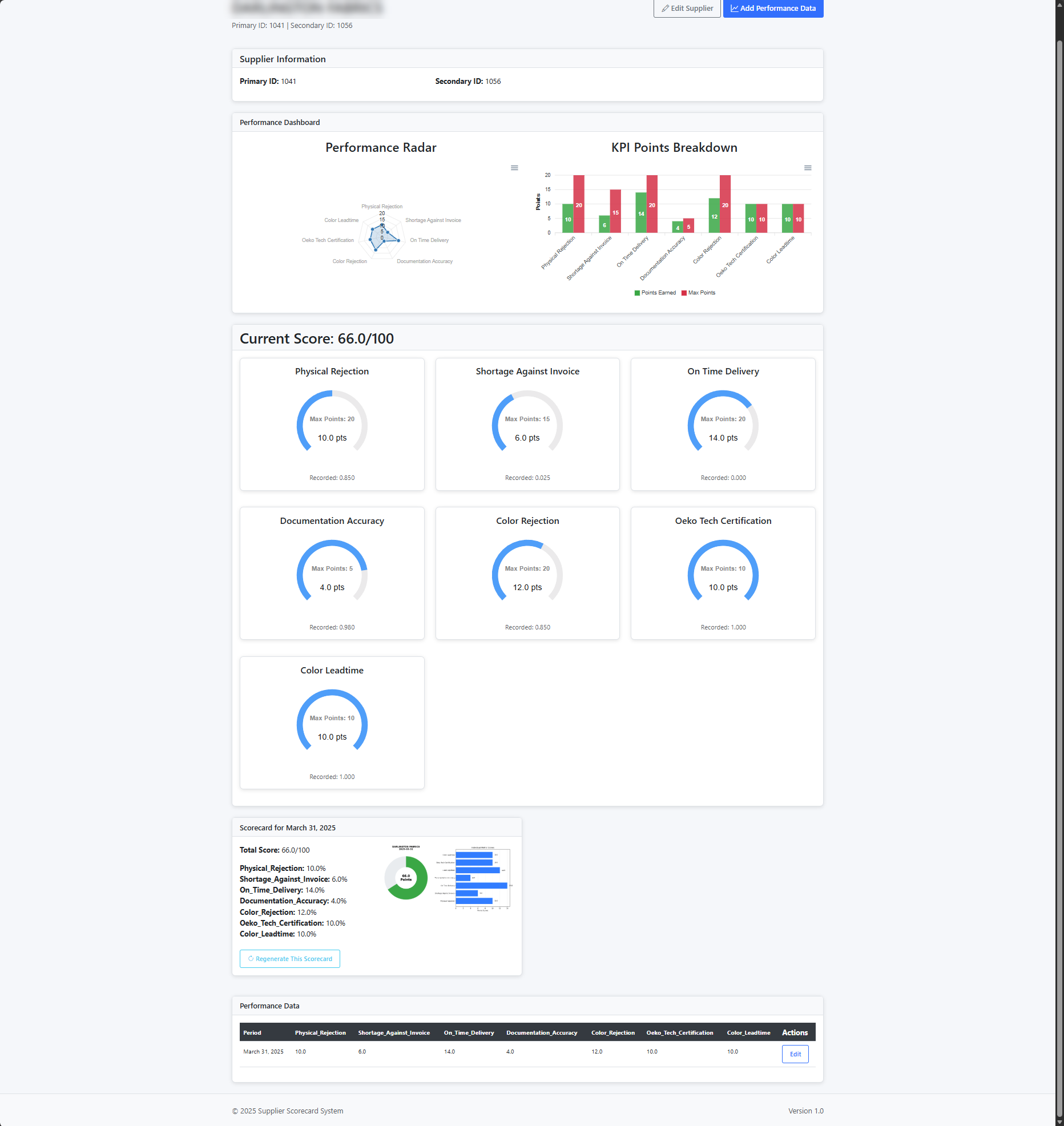
To bring clarity to supplier performance, I developed a data-driven evaluation system that combined operational and quality data into a single performance view.
Using SQL and Python, I extracted and integrated purchase order delivery data from IBM DB2 with raw material laboratory test results. This allowed suppliers to be evaluated across two key performance areas:
Delivery performance – adherence to scheduled delivery dates
Material quality – laboratory test pass/fail rates for both physical and color
These metrics were combined into a supplier scoring model that tracked performance trends over time.
To make the analysis accessible to business users, I built a Django-based reporting application that generated supplier scorecards and performance reports. This allowed sourcing managers to quickly identify suppliers with persistent delivery delays, quality failures, or both.
Results & Impact
The system transformed supplier performance discussions from reactive conversations into data-driven decision making.
Supplier scorecards were shared directly with vendors, clearly illustrating delivery reliability and quality performance trends. This transparency demonstrated the company’s commitment to accountability while also creating a foundation for collaborative improvement.
With clear performance metrics in place, sourcing managers were able to prioritize supplier engagement efforts and focus on the areas with the greatest impact on production reliability.
Key Takeaways
Cross-functional collaboration is critical for data projects
Working closely with purchasing, laboratory, and sourcing teams helped ensure that the metrics reflected real operational concerns rather than purely technical assumptions. Early stakeholder engagement improved adoption of the final reporting tools.
Data integration reveals insights that siloed systems cannot
Delivery data and laboratory testing data were each useful individually, but combining them revealed patterns that were previously invisible. Some suppliers delivered on time but had recurring quality failures, while others struggled primarily with logistics.
Simple, transparent metrics build trust
Supplier performance scoring needed to be understandable to both internal stakeholders and external vendors. Designing clear metrics and transparent reporting increased credibility and encouraged constructive discussions with suppliers.
Tools must match the audience
The Django reporting application made the data easily accessible to non-technical users, allowing sourcing managers to quickly interpret supplier performance without needing to run queries or analyze raw data.
Project Details
Cupid Foundations, Inc.
Manufacturing
3 months